Recycling
Recycling is an important part of keeping Sarasota clean, efficient, and cost-effective. Residents and businesses are required to recycle in line with City guidelines (see Chapter 16 Division 1 - Recycling).
Businesses can work directly with a recycling service provider. For questions, contact sustainability@sarasotafl.gov.
We work with residents and businesses to make recycling straightforward and effective. By keeping recyclable materials out of the landfill, we can:
- Reduce disposal costs
- Improve recycling quality and efficiency
- Keep materials in use longer
- Support local processing and manufacturing
Why is recycling important?
Recycling helps conserve valuable resources and limits the need to produce new materials. This process saves both energy and money. It also keeps our landfill from filling up too quickly, which can delay or prevent the need for expensive new waste facilities.
What can I recycle?
Recycling right helps keep recyclable materials out of the landfill and reduces contamination. Before placing items in your recycling container, make sure they are empty and follow the guidelines below. When in doubt, throw it out. Clean recycling is better than contaminated recycling.
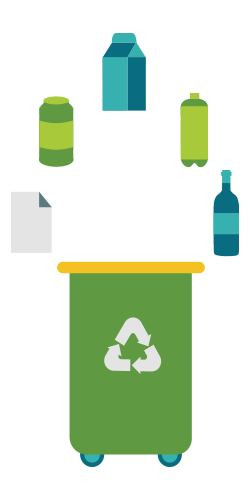
Accepted recycling materials
- Plastic: Plastic containers should be emptied and rinsed. Leave the cap on.
- Cartons: Cartons should be emptied and rinsed. Leave the cap on.
- Glass: Glass containers should be emptied and rinsed. Leave the cap on.
- Cans: Metal cans should be emptied and rinsed.
- Paper: All uncoated paper is accepted.
- Cardboard: Cardboard should be clean and flattened before being placed in your recycling container.
What does NOT go in Recycling?
Some items may look recyclable but should not be placed in your recycling container. These materials can contaminate otherwise recyclable materials or cause problems during the recycling process.
- Dirty Containers: Pizza boxes, dirty to-go containers, and other containers contaminated with food or residue.
- Styrofoam: Styrofoam cups, takeout containers, packaging, and similar materials.
- Plastic Bags: Grocery bags, snack bags, and other plastic bags or film.
- Food Waste: Food scraps and other food waste.
- Small Items: Items smaller than the palm of your hand, such as loose bottle caps and pen caps. Caps may remain attached to recyclable bottles and cartons.
- Tanglers: Hoses, cords, and other long or flexible items that can become tangled in recycling equipment.
Not sure how to dispose of something?
Not sure if an item belongs in your recycling cart, trash, or somewhere else? Use the City of Sarasota’s Cart Smart tool. Simply type the name of an item and Cart Smart will tell you how to recycle or properly dispose of it.
When in Doubt, Throw It Out.
If you aren't sure whether something belongs in your recycling container, put it in the trash. Adding non-recyclable materials can contaminate otherwise clean recycling. Residents Recycling Flyer
Safe battery collection and recycling
Lithium-ion batteries power many of the products we use every day, but they can pose a serious fire risk when placed in commercial or residential trash and/or recycling containers. Batteries can become damaged or crushed during collection and processing, causing them to ignite. These preventable fires can endanger workers and the community, disrupt waste and recycling operations, and cause significant damage.
Help keep our community safe by keeping all batteries out of your household trash and curbside recycling and taking them to an appropriate collection location for safe handling and responsible recycling.
Batteries can be taken to participating collection locations, such as Batteries Plus, for safe disposal and recycling. Batteries that cannot be recycled through a collection location can be taken to the Sarasota County Hazardous Waste Facility (8750 Bee Ridge Road, Sarasota, FL 34241).
What happens to my recycling after it's picked up?
After our local recycling is picked up it goes to a material recovery facility. This state-of-the-art facility operates nearly around the clock with a maze of conveyor belts and specialized equipment that sort recyclables into 'like' materials. Everything is then compressed into a one-ton block and shipped to domestic and foreign mills for use in new material.

What happens if I recycle incorrectly?
 There are many consequences to recycling incorrectly. Plastic bags can close down an entire recycling plant, making the process more costly for everyone. Liquid items can ruin an entire load, making valuable recyclables go to the landfill where they take up space. Putting sharp metal objects in your recycling can harm workers in the recycling plant.
Our responsibility is to separate solid waste, recycling, and yard waste correctly so that our local recycling system will be efficient and affordable.
What if I have another question or request?
If you have a business question, take a look at our Business Recycling Flyer(PDF, 380KB) for answers to common questions.
Residential recycling is managed by Public Works Department. If you want to set up service, get a new cart, or view your pick-up day, please visit the Public Works Solid Waste and Recycling webpage and choose “Request New or Additional Recycling Bins.”